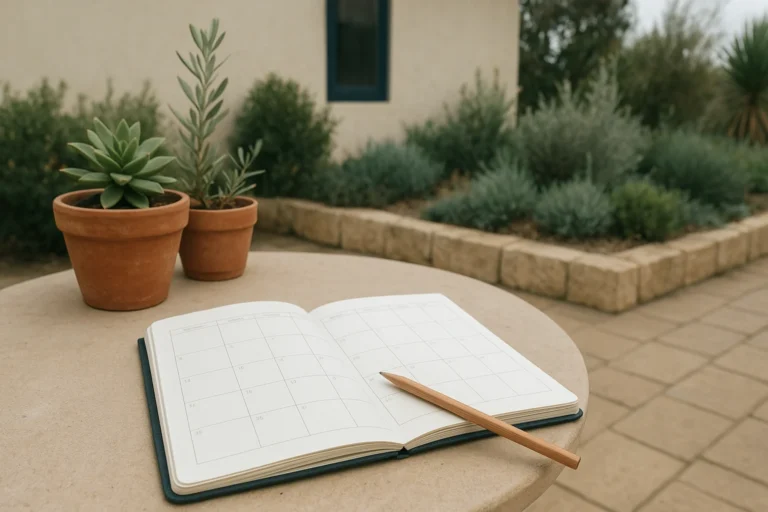
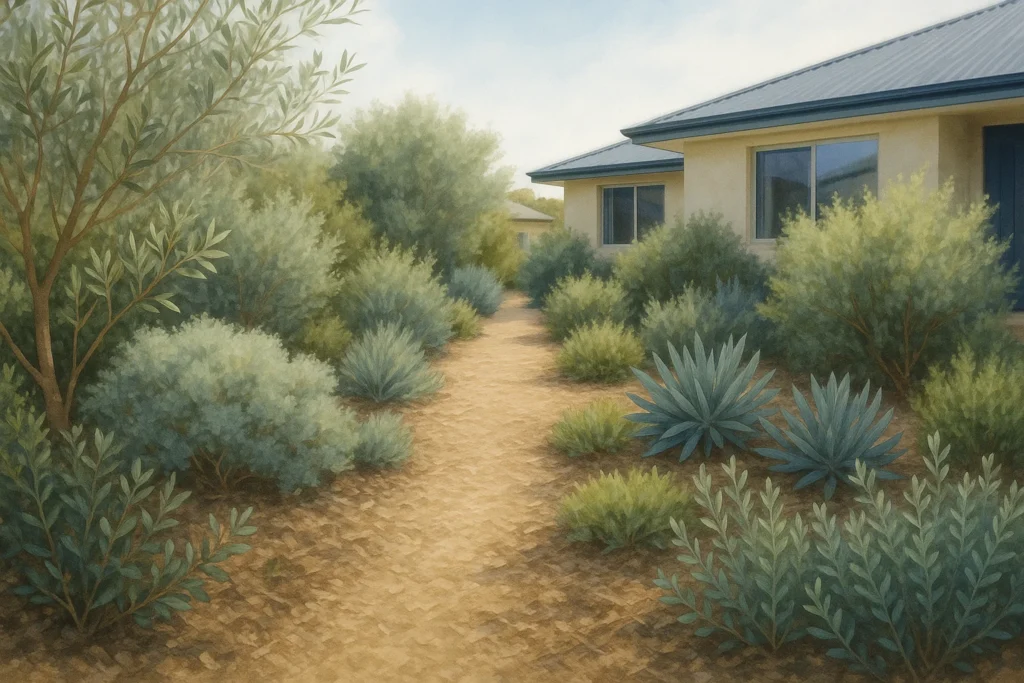
You can get to know your garden without turning a short check into an afternoon of weeding. Fifteen minutes spent looking, comparing and taking a few notes can help you decide what needs attention and what can wait. The aim is to understand changes before reaching for tools or buying a treatment.
For gardens around Victor Harbor and surrounds, late September provides a spring backdrop, but your own plants and conditions are the better guide. This simple routine suits both everyday gardens and properties visited less often. Take a phone or notebook, wear enclosed shoes and set a 15-minute timer.
Minutes 1–3: Get to know your garden from one viewpoint
Begin at a spot that gives you a useful overview, such as the back door or the edge of a patio. Each time you repeat the routine, start here and follow the same short route. Familiar views make differences easier to notice.
Look for changes in plant shape, colour and coverage. Has a shrub started leaning across a path? Is a climbing plant spreading beyond its support? Has a previously shaded patch become exposed?
Take one wide photograph from your starting point. You are building a simple reference, not a perfect garden portrait. Avoid drawing conclusions from memory alone, particularly if several weeks have passed between visits.
Minutes 4–7: Look closely at three plants
Choose three reference plants in different parts of the garden: perhaps one near the house, one in an exposed bed and one beside a regularly used path. Revisit these same plants on future rounds.
Without pulling or cutting anything, compare older leaves with newer growth. Notice whether a change affects one leaf, a single branch or most of the plant. Check whether nearby plants show something similar.
A damaged leaf or a few insects do not, by themselves, tell you what is wrong or whether action is needed. Record what you can see rather than naming a cause. “Brown edges on several outer leaves” is a more useful note than “diseased shrub”. If a concerning change persists or spreads, clear photographs can help when seeking qualified gardening advice.
Minutes 8–11: Check how the garden is used
Walk your usual route between doors, gates, bins and outdoor seating. Look for soft growth narrowing access, loose plant ties, fallen fruit and small items left underfoot. Observe from stable ground and leave heavy, sharp or unfamiliar debris alone.
Keep any immediate action tiny and low-risk: move an empty watering can to its storage spot or pick up a lightweight toy. Leave pruning and larger tidy-ups for a separate session so the observation round stays short.
Handy hint: Give each observation a location and a scale. “Side path, one branch at shoulder height” is easier to act on later than “garden needs cutting back”.
Minutes 12–15: Choose one next step
Finish by sorting your notes into three groups: watch, small job and seek advice. Choose just one manageable task for another day. A repeat photograph next week may be more useful than intervening immediately.
Short checklist:
- Take one photograph from the usual starting point.
- Compare the same three reference plants.
- Check access along regularly used garden paths.
- Write down visible changes without guessing their cause.
- Choose one next step and a date to look again.
To get to know your garden, repeat the routine rather than looking for work every time. Some rounds will simply confirm that there is nothing new to add to your list.
For a closer look at moisture before deciding on a task, see our guide to checking the soil before watering.