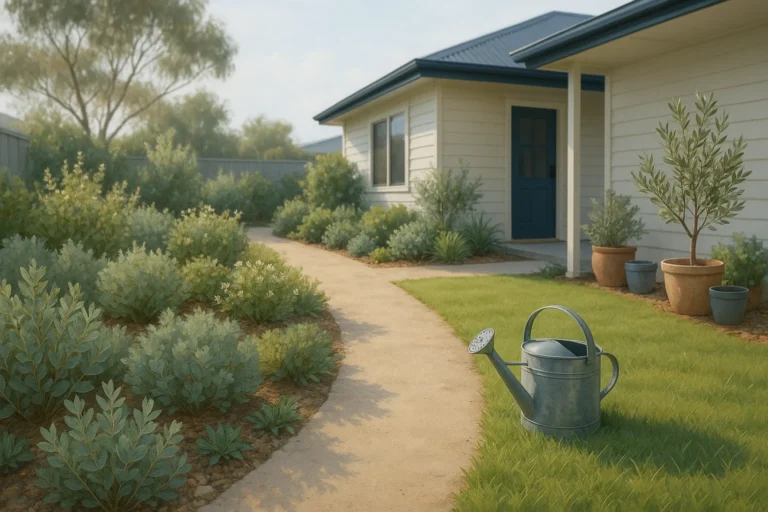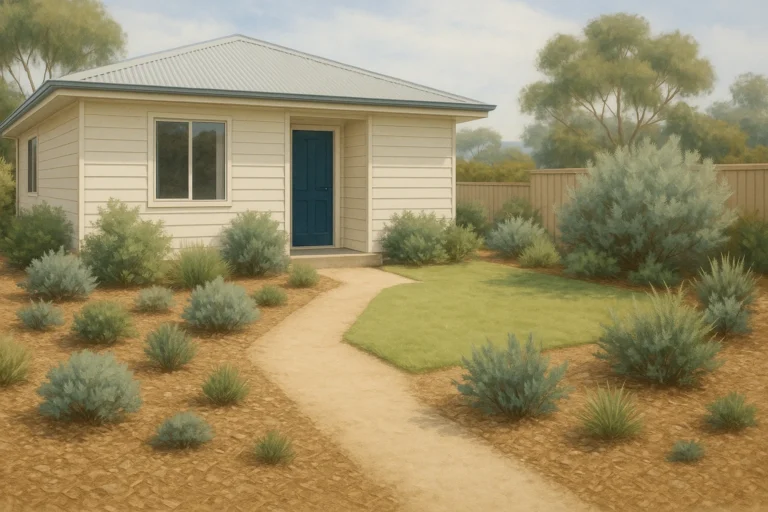
Watering a garden starts with checking the soil, because a dry-looking surface can hide moisture below. Soil beneath mulch can still be damp, while a pot in a windy corner may dry much faster than a nearby garden bed. A quick check helps you avoid both wasted water and soggy roots.
Make a simple moisture check
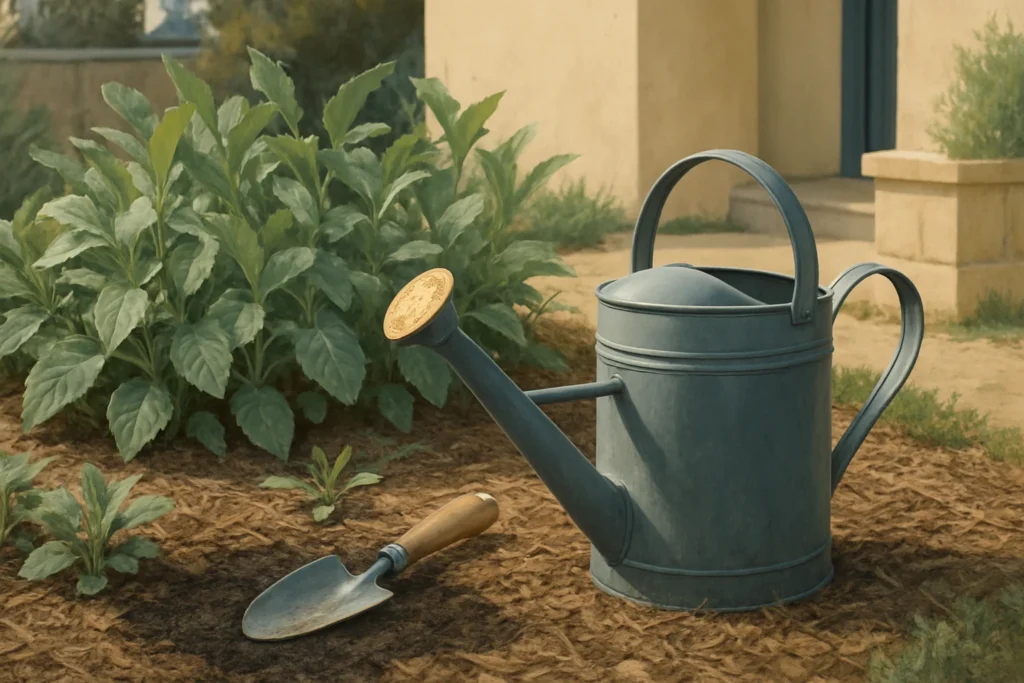
Move mulch aside and check the soil a few centimetres below the surface using a finger or hand trowel. Check several places, including the original root ball of recently planted shrubs. Do not dig through major roots or where buried services may be present.
Build a routine for watering a garden
- Group plants by their needs. New plantings, established shrubs, lawns and pots should not automatically share the same watering schedule.
- Water the root area gently so the soil can absorb it. If water runs away, pause and allow it to soak in before continuing.
- Recheck beneath the surface afterwards. A wet crust over dry soil means the water has not reached far enough.
- Review automatic timers after rain and when the weather changes. A winter setting is unlikely to suit a hot, windy period.
- Inspect hose connections and drippers while they are running. A small leak can waste water without helping the plants.
Keep a simple watering record
Keep a short note of the weather, watering and how the soil felt the next day. After a fortnight, you will have a much more useful guide than a generic daily timetable.
When to investigate further
Persistent puddling, plants wilting in wet soil or water beading on dry soil need diagnosis. Do not respond by simply increasing the timer. Check current local watering rules before using irrigation.
Further reading: SA Water: be water wise.
If you are handing the garden to someone else while you are away, show them the areas that need checking. Our garden watering handover guide explains how to leave clear instructions and agree on when to ask for help.