Going away should not mean leaving someone to guess which pots need watering or how your garden normally runs. A simple handover gives a neighbour, co-host or garden helper a clear starting point without asking them to become a gardener overnight.
For homes around Victor Harbor and surrounds, October’s spring context is a useful reminder to review instructions rather than reuse an old summer routine. Actual watering needs still depend on the plants, their position and conditions at the time. One page of clear notes is usually more useful than a long list of gardening advice.
Define the job before listing the plants
Start with the dates you will be away, the agreed visit days and what the helper is responsible for. Keep the scope narrow: checking selected plants and watering where needed, rather than general garden maintenance.
Say what is outside the job, too. If lawns and established beds are not part of the handover, state that plainly. Leave a contact number and explain what deserves a message, such as a damaged hose, an irrigation area that stays unusually wet or a plant looking markedly different from the previous visit.
Check current local watering restrictions before finalising the instructions. Do not assume a routine used on an earlier trip is still suitable.
Make each watering area easy to identify
Group the garden into a few recognisable areas, such as ‘pots beside the kitchen door’, ‘raised vegetable bed’ and ‘hanging baskets under the verandah’. Avoid relying on plant names alone, especially if the person helping is unfamiliar with your garden.
For each area, write down your established watering method and any important exceptions. Specify whether the task is to check first or follow an agreed routine. Where you already use a measured amount, identify the container and amount clearly rather than writing ‘give it a good drink’.
Do not invent a new watering schedule just for the handover. If you are unsure about a particular plant’s needs, seek suitable plant-care advice before leaving.
Handy hint: Use the same simple labels on your note and on weather-resistant tags beside groups of pots. ‘Door pots’ is easier to match than ‘the smaller plants near the other container’.
Show the equipment and set clear limits
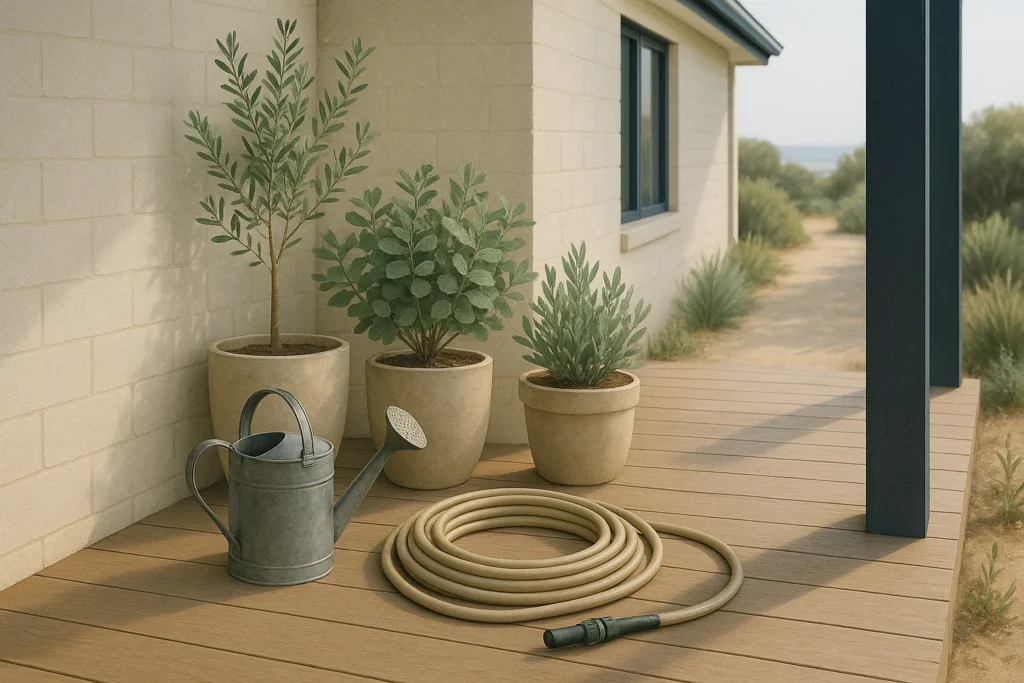
Walk through the task once with your helper if possible. Show where the watering can or hose is stored, demonstrate your usual method and explain where everything should go afterwards. Make sure access is clear and the task does not require climbing or moving heavy containers.
If an irrigation timer is already in use, record whether it should be left alone. Explain which areas it covers so the helper does not automatically water them again by hand. Leave troubleshooting and repairs out of the task: ask for a message if something appears wrong.
Keep hoses out of walkways during use and return them neatly afterwards. Agree on how gates should be left, particularly where pets are present.
Leave a short checklist for each visit
Put the note somewhere agreed and easy to find. A simple tick list helps the helper report what was checked without writing a lengthy update.
- Check only the listed watering areas.
- Follow the area-specific instructions and exceptions.
- Leave irrigation settings unchanged unless agreed otherwise.
- Return equipment and leave paths clear.
- Secure gates as instructed and report concerns.
A useful handover makes the boundaries as clear as the watering tasks. The helper should know what to do, what to leave alone and when to ask you rather than guess.