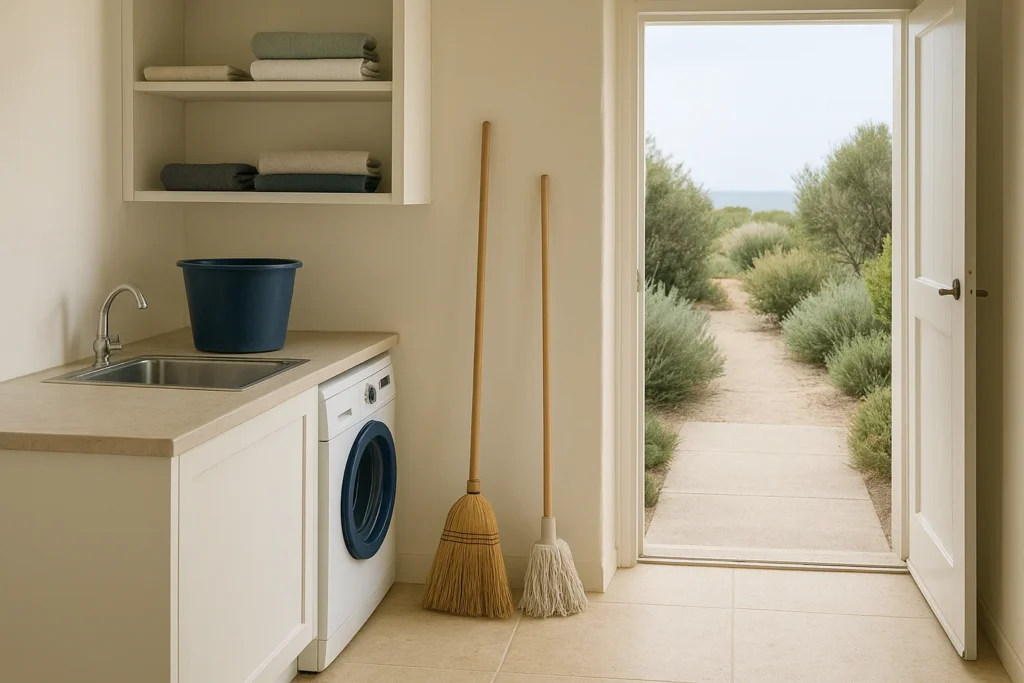
A good test of your cleaning gear storage is whether you can take out the broom without catching a mop handle or moving a stack of buckets. Try it before you buy another rack or tub. In a Victor Harbor home, a laundry may do double duty as the way out to the clothesline, so it matters where the gear goes both during a clean and afterwards.
Plan cleaning gear storage around the first reach
Open the cupboard as you normally would and reach for the item you use most. Notice what you have to shift and where you put it while you work. If a bucket always ends up in the doorway while you get the broom out, that is the arrangement to change first.
Give the broom and mop separate positions rather than crossing their handles in a corner. If you already have a suitable tool holder, leave enough space to release one handle without knocking the next one loose. Keep heavy items low, but not in the foot space where you stand to reach a shelf. Leave the doorway and the route to the back step clear.
Give damp equipment a drying place
Putting everything straight back is not always the tidiest option. Empty the bucket after use and let it drain upside down on the laundry sink’s draining board, if it fits securely. Leave the mop head somewhere airy where it can dry without dripping onto the floor. Put both away once dry, rather than leaving the mop propped in the bucket.
Keep clean cloths on a dry shelf, separate from used ones waiting for the wash. Follow their care instructions and let them dry fully before stacking them. Handy hint: Label the front edge of the shelf rather than the cloth basket. When someone takes the whole basket to fold the washing, its return spot is still marked.
Keep products apart from the tools
A child helping with a dustpan should not have to reach past cleaning products. Keep products in their original labelled containers, with lids closed, and follow the storage directions on each label. Use a secure cupboard inaccessible to children and pets, away from food. A carry basket can be useful for taking brushes and cloths from room to room, but it is not secure storage for bottles.
For a holiday home, let the person preparing the property know which tools are for guests and where used cloths go. A simple note inside the tool cupboard is more useful than an instruction to leave everything tidy.
A quick put-away checklist
- Return dry tools without crossing handles or blocking the door.
- Leave the bucket empty and damp gear in its drying place.
- Separate used cloths from the clean supply.
- Close the product cupboard securely and check that the floor is dry and clear.