Draughts around doors can make a room feel uncomfortable, especially in coastal wind. Before adding seals, check whether the draught comes from a worn seal, poor door alignment or an intentional ventilation opening. Those are different problems with different solutions.
Find draughts around doors
On a windy day, feel around the closed door with your hand or hold a light strip of tissue near the edge. Do not use a flame. Check the existing seals for gaps, dirt or sections that have peeled away.
Choose a modest fix
- Clean the contact surfaces using a method suitable for the door finish. Let them dry before applying an adhesive product.
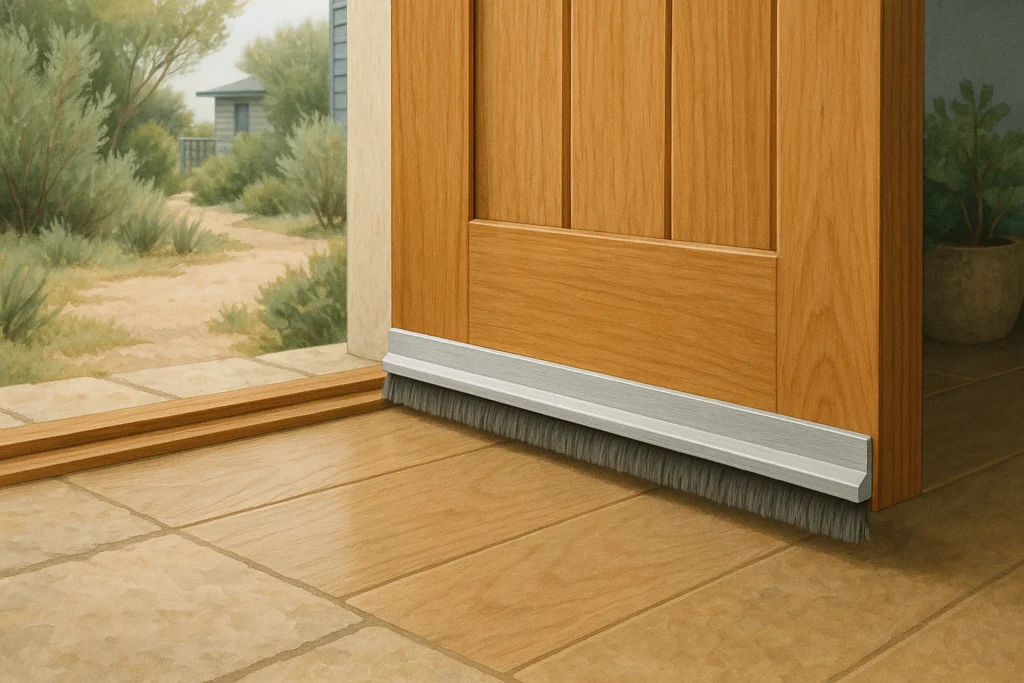
- Measure the gap and read the seal manufacturer's sizing instructions. An oversized seal can stop the door latching properly.
- Use a product suitable for the door material and exposure. Follow the fitting instructions rather than stretching the seal around corners.
- Close and reopen the door several times. Check the latch and make sure no one needs excessive force to operate it.
- Recheck after a few days, particularly where adhesive strips meet at corners.
Test the bottom gap first
A removable draught stopper can help identify whether the bottom gap is the main source before you choose a permanent product. Keep it clear of exit routes and remove it when the door is used.
Important limits
Do not block required vents, combustion-air openings, drainage paths or ventilation for gas appliances. Fire doors and specialist door systems need suitable professional advice. A swollen, sagging or damaged door needs its underlying fault addressed rather than simply adding more seal.
Keep the product packaging or model details with your maintenance notes. At the next inspection, look for peeling ends and check that the door still closes easily. Report recurring movement or damage instead of repeatedly replacing the same strip.