A monthly property check helps turn vague maintenance worries into a short, useful list. It is an observation exercise, not a reason to dismantle fittings or climb onto the roof. Use the same route each time so changes become easier to notice.
Start at the entrance
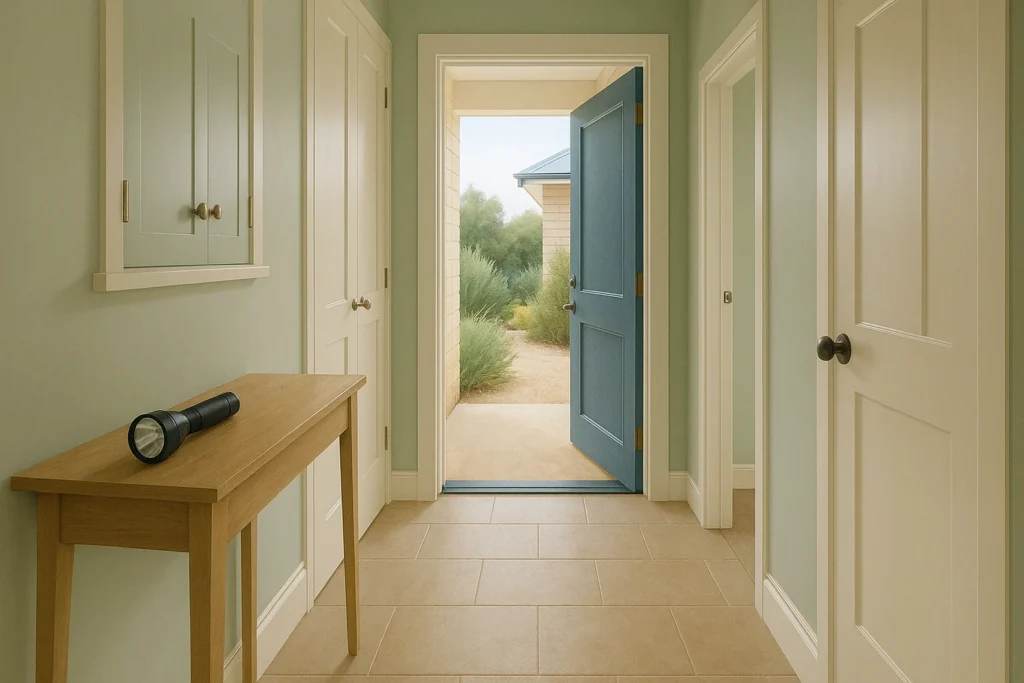
Check the path, gate, handrail and front door from a safe position. Look for loose fittings, new movement, slippery growth and anything that obstructs access. Photograph concerns so you can describe them accurately when arranging help.
Follow a monthly property check route
- Look beneath sinks and around visible pipework for fresh moisture or staining, without disturbing plumbing connections.
- Check doors and windows for changes in operation. Note new sticking or unusual gaps instead of forcing them.
- Inspect visible walls and ceilings for new stains, cracks or peeling finishes. Record location and date rather than diagnosing from appearance alone.
- Look at outdoor drainage from ground level. Note blocked surface grates or pooling, but do not open pits or climb to gutters.
- Check your maintenance records for equipment servicing and alarm checks due under the relevant instructions and requirements.
Give every task a next action
Use three priorities: urgent safety issue, repair to arrange, and routine upkeep. Assign a next action and date to each item. A list without an owner or deadline tends to become a record of things still not done.
Act on significant changes
Water near electrical equipment, a suspected gas leak, unstable structures or signs of serious damage need prompt professional attention. Keep people clear of the area. Do not conceal a stain or crack with paint until the cause has been investigated.
Keep the previous inspection notes handy as you walk. Mark completed repairs and photograph any change from the same position. This gives the owner or contractor a useful comparison and helps separate a new problem from one already being monitored.