A holiday-home kitchen needs room for more than the items its owner leaves behind. Guests arrive with groceries, drink bottles and their own cooking habits. If every shelf and bench is already full, even making breakfast can involve moving things out of the way.
With spring underway in Victor Harbor and surrounds, a small kitchen declutter is a useful property preparation task. There is no need to replace everything or buy matching storage containers. Start with one cupboard and aim for a kitchen that is straightforward to use.
1. Sort one small area at a time
Choose a cutlery drawer, mug shelf or food-storage cupboard rather than emptying the whole kitchen. Work between stays, when guests are not using the space.
Place items into three groups: keep for guests, store elsewhere for owner use, and remove. Check that anything you keep is clean, intact and useful. Take chipped crockery, badly damaged utensils and containers without matching lids out of the guest collection.
Keep owner belongings in a clearly designated storage area rather than mixed through guest cupboards. Set aside suitable unwanted items for donation, and check local disposal guidance for anything that cannot be reused. Avoid leaving a permanent sorting pile on the bench.
2. Keep enough essentials without filling every shelf
Use the home’s intended guest capacity as your starting point. Count plates, bowls, glasses, mugs and cutlery, then consider a modest spare allowance. A crowded collection of unrelated pieces is not necessarily more useful than a smaller, complete set.
- Keep everyday cookware that fits the kitchen and its available storage.
- Retain a few versatile preparation tools, such as a chopping board, colander, measuring jug and mixing bowl.
- Match food-storage lids to their bases and remove incomplete sets.
- Review duplicate gadgets and keep those with a clear, regular purpose.
Before removing an item, consider whether it serves a practical need that another item cannot comfortably cover. Decluttering should make cooking easier, not leave guests short of basics.
3. Give groceries and preparation space priority
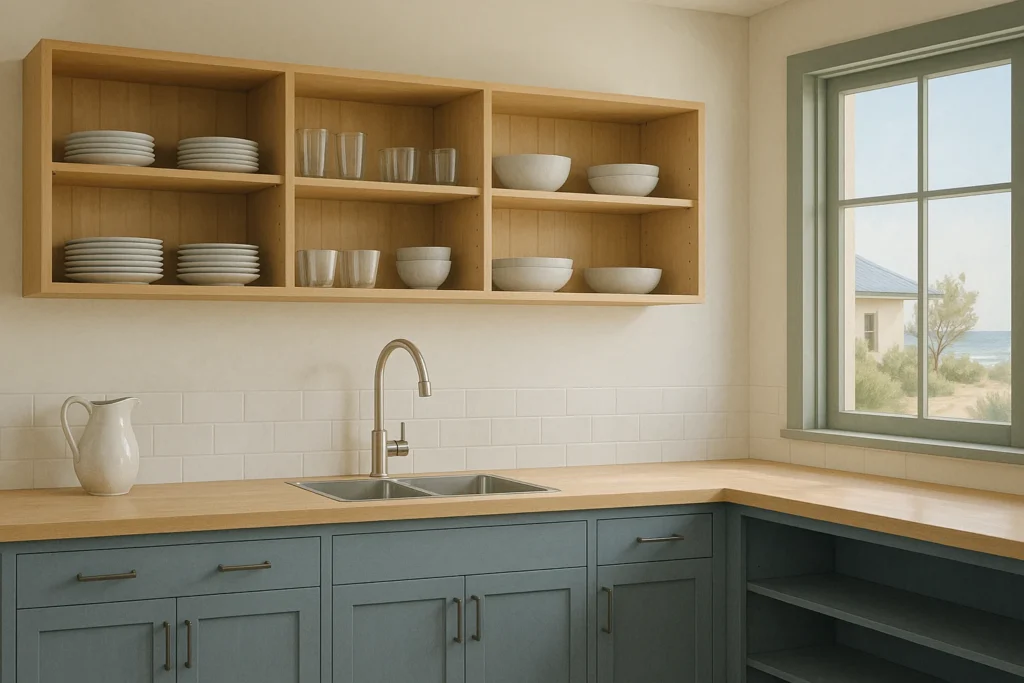
Leave a clearly identifiable cupboard or shelf empty for guest groceries. Keep everyday crockery together and group cooking utensils near their usual preparation area. Put heavier cookware on accessible lower shelves rather than overhead.
Clear a usable section of bench for unpacking food and preparing meals. Decorative pieces, spare trays and rarely used appliances can often move into suitable storage. Do not cram cupboards so tightly that guests have to unstack several items to reach one bowl.
Handy hint: Open the cupboards as if you have just arrived with a shopping bag. If it is not obvious where groceries belong, free up one shelf and add a simple label inside the cupboard. Check that labels remain accurate whenever the layout changes.
4. Finish with a short reset checklist
A quick final check helps keep the declutter practical. If an owner and co-host share property preparation, agree on the layout so items are returned consistently.
- Guest grocery space is empty and easy to identify.
- Everyday crockery and utensils are easy to reach.
- Containers have matching lids.
- A useful preparation area is clear.
- Owner belongings and unwanted items have been moved out.
After the next stay, review any feedback about missing or hard-to-find items. Adjust the essentials thoughtfully rather than filling the newly cleared space again.