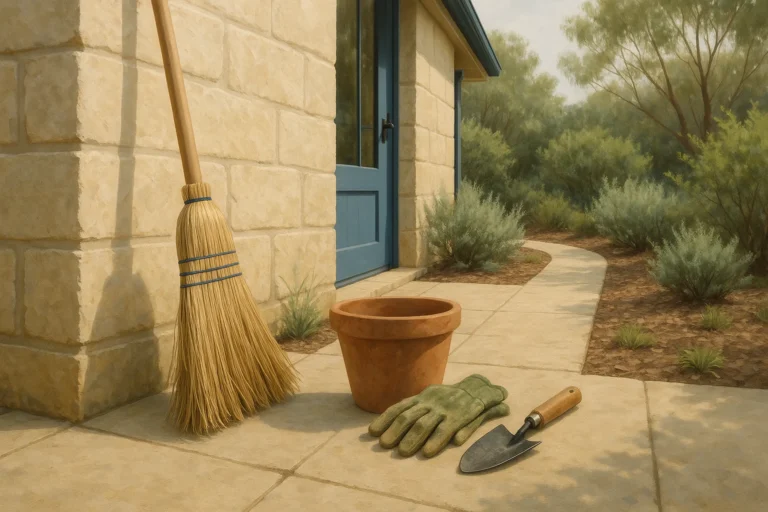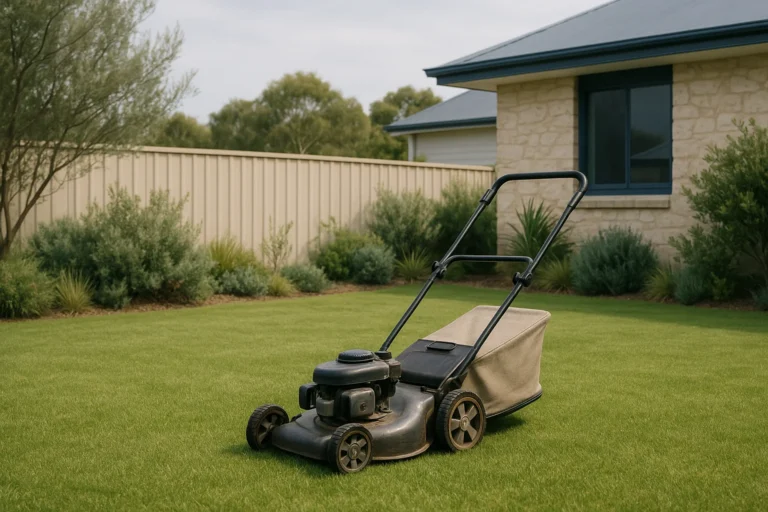
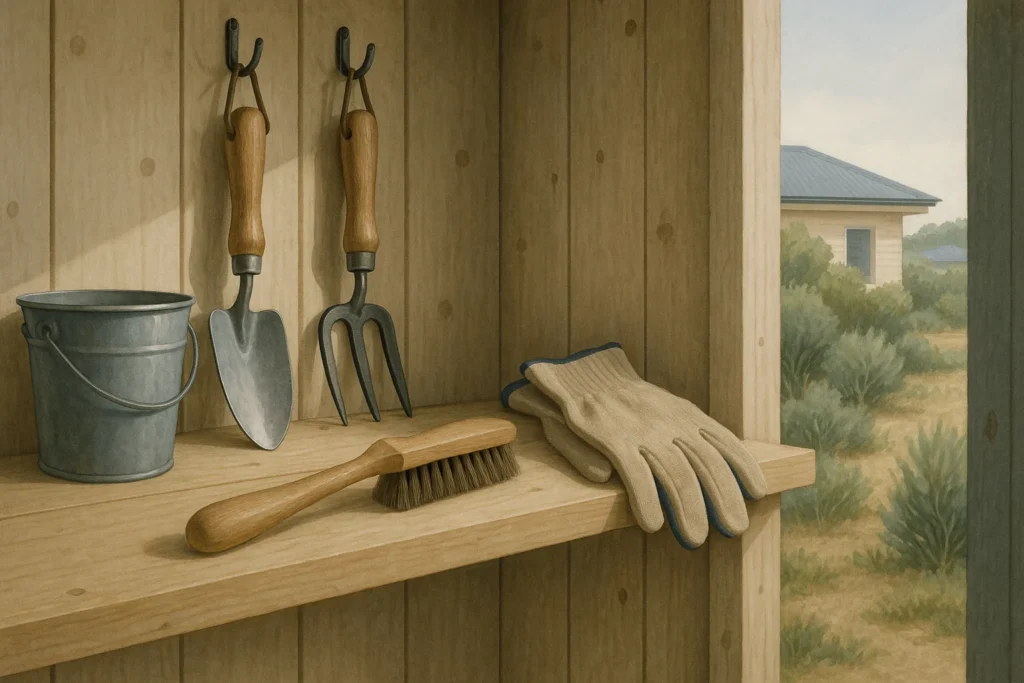
Giving garden tools a few minutes of care after a gardening session can save time at the next one. Clean, dry tools are easier to inspect, and organised storage reduces the temptation to use the wrong tool because the right one is buried somewhere.
Make the tool safe first
Switch powered equipment off and isolate it as directed by its manufacturer before cleaning or inspecting it. Remove batteries or disconnect power where instructed. Let hot equipment cool. Never clear a mower or cutting head while it can start unexpectedly.
An end-of-job routine for garden tools
- Brush soil from spades, forks and hand tools. Wipe handles and check for cracks, splinters or loose fittings.
- Clean cutting tools using the manufacturer's recommended method. Plant residue can make blades sticky; do not force stiff tools.
- Dry tools before storing them. Apply suitable protective lubricant only where the manufacturer recommends it, keeping grips clean.
- Check guards, cords, fasteners and battery housings. Remove damaged equipment from use and arrange proper repair.
- Store sharp tools securely, with covers where supplied, away from children and guests. Keep chargers and batteries in suitable dry conditions according to their instructions.
Give each tool a storage place
Outline tool positions on a storage board or label hooks. You can see what is missing at a glance, and someone helping you can put everything back without asking.
Leave specialist servicing to specialists
Blade sharpening, electrical faults and unfamiliar mechanical work are not worth improvising. Follow servicing intervals and retain the manuals. If a tool vibrates unusually, has damaged insulation or behaves unpredictably, stop using it until it has been checked.
Keep manuals together and note the model number for each powered tool. Record any fault before putting equipment away, so another person does not mistake it for ready-to-use gear. Check replacement parts against the manufacturer’s instructions before ordering.