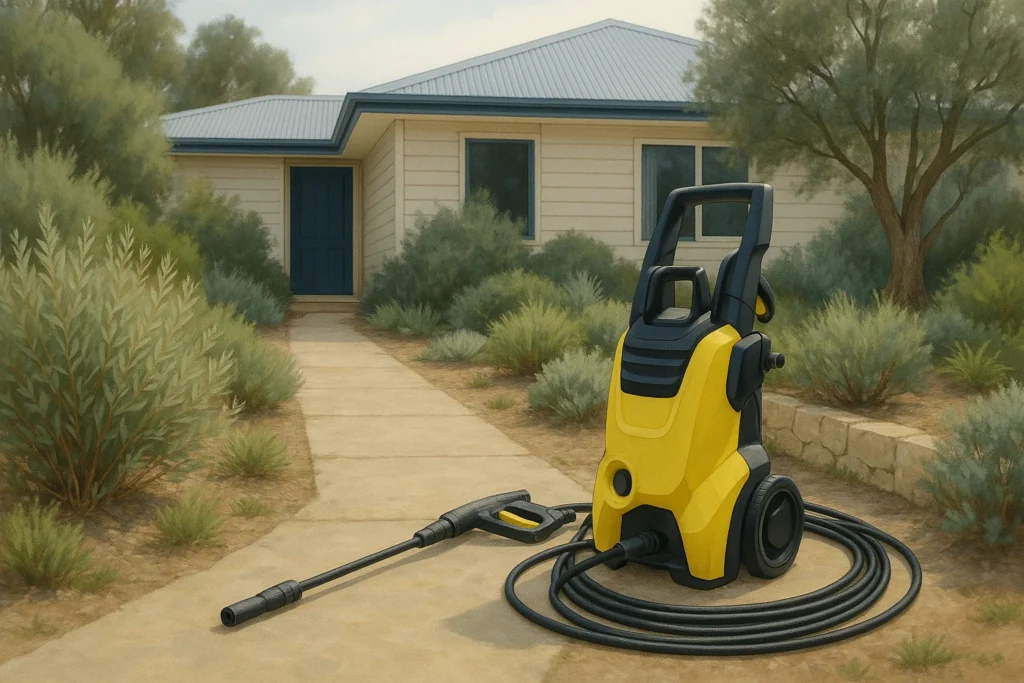
Before you pressure-clean a path, remember that the wrong setting or technique can damage the surface quickly. Before starting, identify the material, its condition and any coating. Some surfaces need a gentle wash, while others should not be pressure-cleaned at all.
Check suitability
Read the cleaner manual and the surface manufacturer's guidance. Do not pressure-clean suspected asbestos, fragile coatings, damaged masonry or surfaces with unknown hazardous paint. Keep well away from electrical equipment, people, pets and openings into the building.
Prepare before you pressure-clean a path
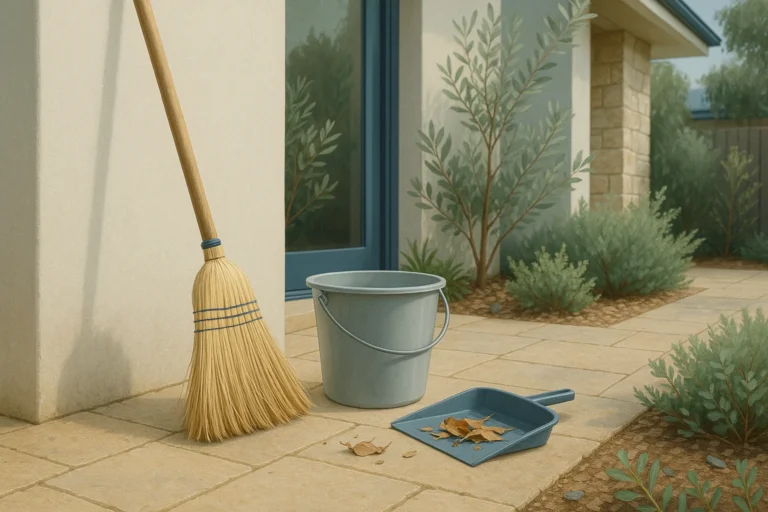
- Remove furniture and loose debris. Check the route for hoses so they do not create a trip hazard.
- Plan where dirty water will go. Do not wash sediment or chemicals into stormwater drains; check local requirements and use an appropriate collection method.
- Wear the protection specified by the equipment manufacturer, including suitable footwear and eye protection. Keep bystanders out of the area.
- Test an inconspicuous patch using the gentlest suitable setting and nozzle. Follow the recommended working distance and inspect the result after it dries.
- Work methodically, avoiding prolonged spraying in one spot. Stop if the finish lifts, aggregate loosens or joints begin to erode.
Compare the test patch when dry
Take a photograph of the dry test patch beside an untreated area. Wet surfaces can hide damage and make the cleaning result appear better than it is.
Leave difficult jobs to specialists
Roof work, high areas, uncertain materials and contaminated surfaces need appropriate professional assessment. Never use a pressure jet on skin or try to clear a nozzle while the machine is pressurised. Follow shutdown and depressurising instructions before maintenance.
Once the area is dry, check edges and joints before returning furniture. Record any damage that needs attention and keep the equipment settings with your maintenance notes. This makes the next cleaning decision easier and helps avoid repeating an unsuitable method.