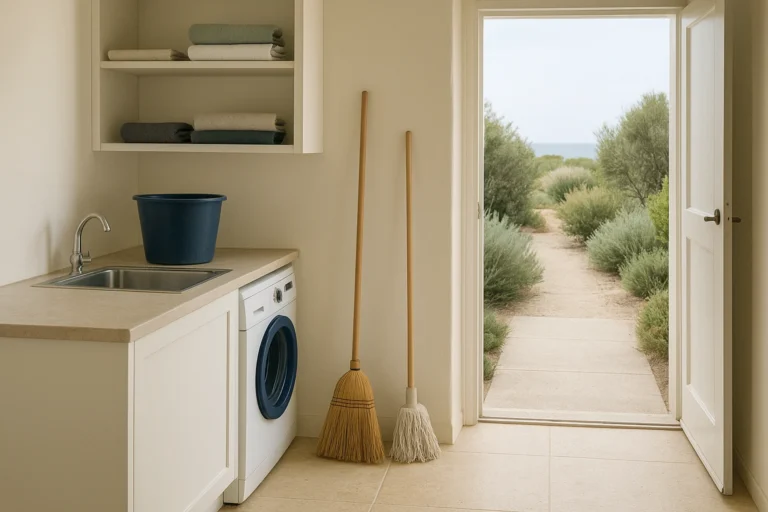
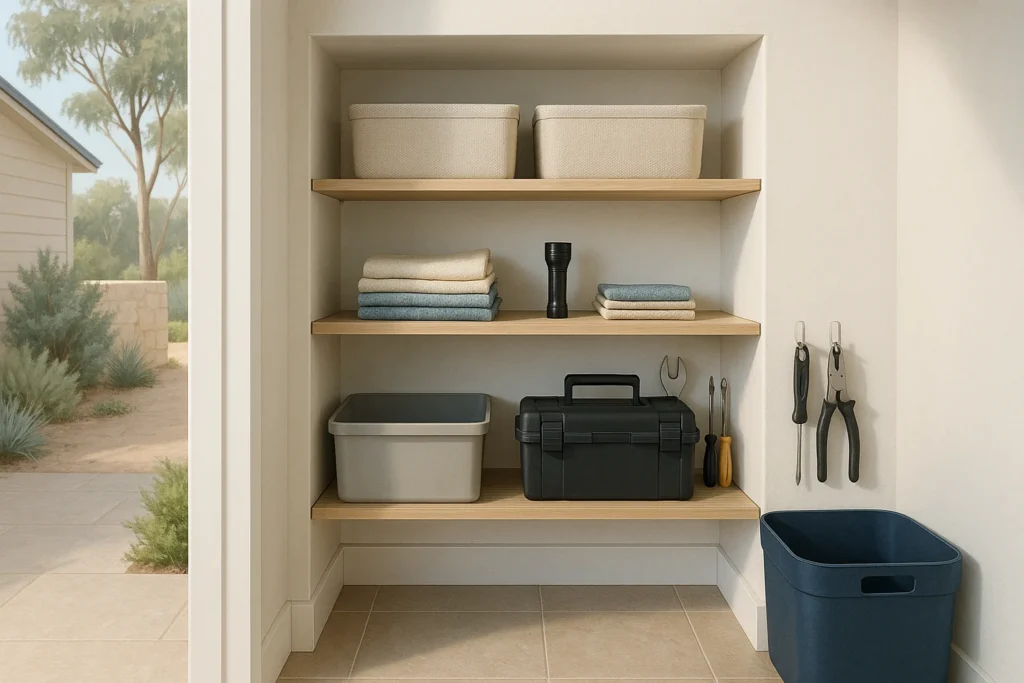
A maintenance cupboard should help you find what you need, not leave you shifting three bags to reach a cloth. In a small space, the biggest improvement often comes from deciding what belongs there and giving each item a clear home.
For homes around Victor Harbor and surrounds, a spring tidy is a useful opportunity to reset this easily overlooked space. Keep the task manageable: organise one shelf at a time, using containers you already have before buying anything new.
1. Set the maintenance cupboard’s boundaries
Choose a simple purpose, such as storing everyday supplies for minor household upkeep. Avoid letting the cupboard become overflow storage for linen, beach gear, paperwork and unfinished projects.
Clear a nearby table and sort one shelf into three groups: belongs here, belongs elsewhere and needs a decision. Keep walkways clear while you work. If something is too heavy or awkward to move comfortably, leave it in place and get help rather than stretching or twisting.
Wipe empty shelves with a slightly damp cloth, then let them dry before restocking. Check for obvious shelf damage without testing it by adding weight. A damaged or unstable shelf needs attention before it is used again.
Do not use this tidy-up as a reason to decant, combine or experiment with leftover products. Keep any retained products in their original labelled packaging and follow their storage directions. If this cupboard cannot meet those directions, it is not a suitable storage spot.
2. Arrange maintenance cupboard supplies by use
Place light, frequently used items between waist and shoulder height where practical. Keep heavier items lower down, without creating an awkward pile on the floor. Leave enough space to lift each container out without disturbing its neighbours.
Group supplies by use rather than appearance. A compact cupboard might have these zones:
- Wipe and protect: clean cloths, furniture pads and a folded protective sheet.
- Measure and mark: a tape measure, pencil and small notebook.
- Small fittings: clearly separated spare knobs, brackets or furniture fixings, labelled with the item they belong to.
Store sharp items securely and keep unsuitable contents inaccessible to children and guests. In a holiday home, separate owner maintenance supplies from anything guests are intended to use.
3. Label for the next person
Use plain labels that describe the contents, such as “felt pads” or “spare wardrobe fittings”. Avoid broad labels like “bits”, which make it easy for unrelated objects to accumulate.
Shallow containers usually make small items easier to see than deep tubs. Leave labels facing forward and avoid stacking containers so high that retrieving one becomes a balancing exercise.
Handy hint: Put a matching label on the shelf beneath each container. The empty space then shows exactly where it belongs after use, even when someone else puts it away.
4. Finish with a quick reset checklist
Keep a short list inside the door for items that genuinely need replacing. Check it before shopping rather than buying another roll or packet because the existing one is hidden.
After each use, take a moment to return supplies to their labelled places. Use this short checklist to keep the cupboard workable:
- Containers are easy to remove and return.
- Labels are readable from the doorway.
- Nothing is balanced precariously or blocking access.
- Used cloths are removed for washing and returned only when dry.
- Unrelated items go back to their proper storage areas.