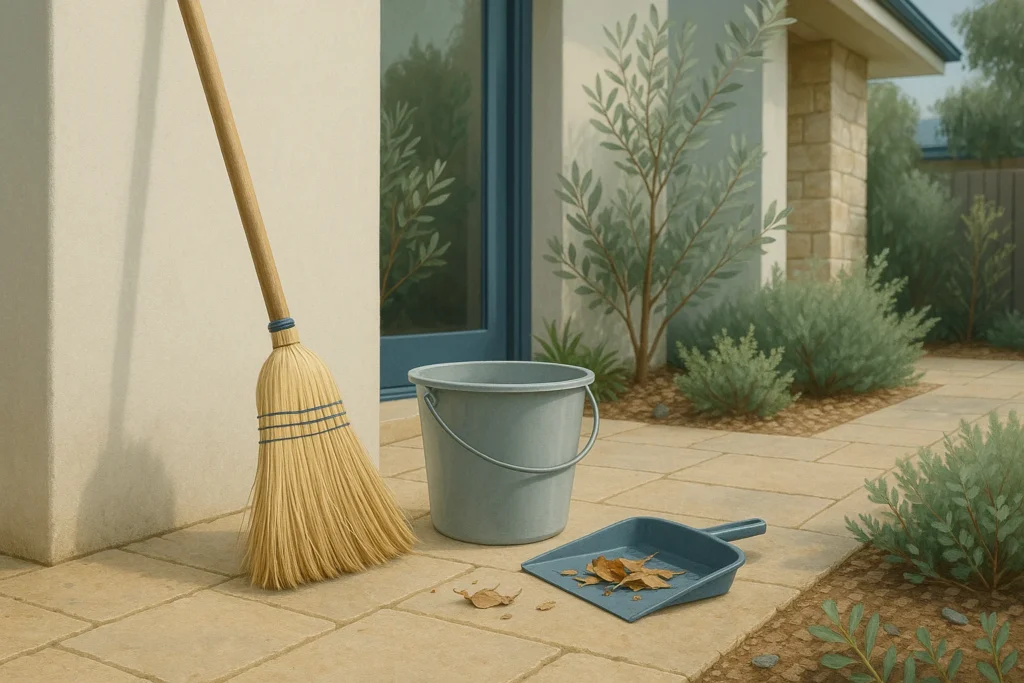
Regular sweeping can prevent outdoor paving from reaching the stage where a major clean seems necessary. Leaves, sand and damp debris collect at edges and beneath furniture, so include these areas rather than only cleaning the middle of the path.
Start with the surface
Identify whether the paving is concrete, clay, stone or another product, and whether it has been sealed. Cleaning products suitable for one material can mark another. Check the supplier's care advice before using chemicals or abrasive tools.
Keep outdoor paving care simple
- Sweep loose debris into a pile and collect it. Do not push it into garden drains or onto the street.
- Move lightweight furniture safely and clear beneath it. Ask for help with heavy or awkward items.
- Treat a small mark with a compatible mild method, testing in a hidden area first. Follow product dilution, contact-time and rinsing instructions.
- Keep runoff contained as required and protect neighbouring plants and surfaces.
- Let the area dry before judging the result or returning furniture. Keep people away if it remains slippery.
Find where debris comes from
Check where debris returns most quickly. An overflowing pot, overhanging plant or poorly positioned downpipe may be contributing to the problem. Fixing the source can reduce repeated cleaning.
Watch for movement
Rocking pavers, sinking sections and raised edges need repair, not stronger cleaning. Photograph trip hazards and restrict access where necessary. Avoid pressure-washing jointing material out of paving or using salt as a weed treatment; both can create further problems.
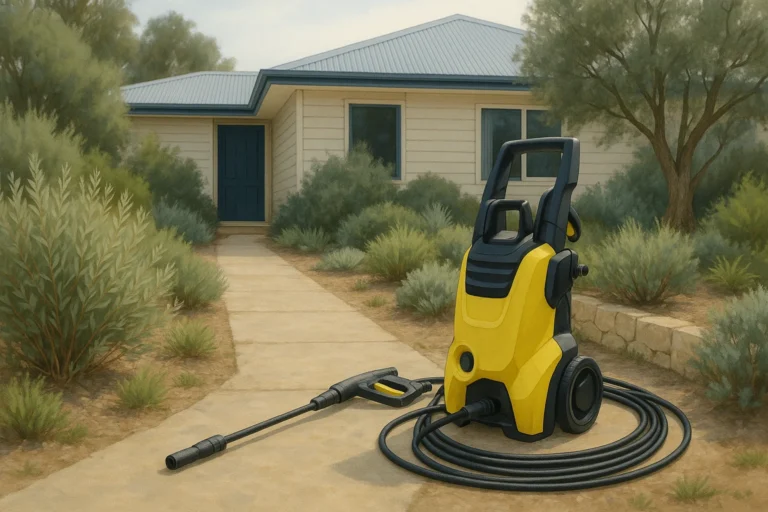
When a surface needs more than a routine sweep, read about our outdoor cleaning and pressure washing in Victor Harbor. The right method depends on the surface condition, so inspect delicate or damaged materials first.