Dust and sand can collect in window tracks and flyscreens, particularly in a coastal home. Gentle cleaning can improve appearance and operation, but it will not repair a damaged frame or worn mechanism. Work only on windows you can safely reach from a stable position.
Check the design first
Read the window manufacturer's care instructions if available. Some screens are designed to be removed; others are fixed or form part of a security system. Do not force a screen out or disturb security fittings.
Clean window tracks and flyscreens in stages
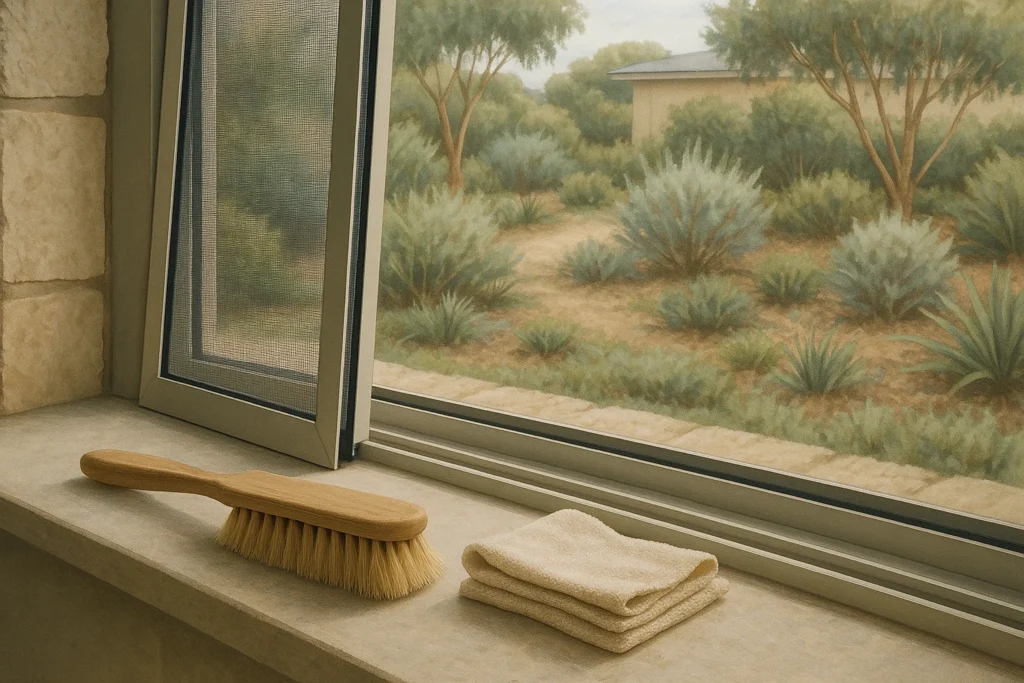
- Remove loose grit with a soft brush or vacuum attachment, taking care not to scratch the finish.
- Wipe accessible tracks with a lightly damp cloth and a compatible mild cleaning solution. Avoid flooding the track or nearby wall.
- Keep visible drainage openings clear of loose debris without pushing tools deep into them or changing their shape.
- Gently clean an accessible screen using the manufacturer's method. Support delicate mesh so it does not stretch or tear.
- Dry the area and test the window gently. Refit removable screens securely according to their instructions.
Keep a dedicated soft brush
Use a separate soft brush for window tracks and label it. Brushes used outdoors may carry grit that scratches frames or glass.
Know when cleaning is not enough
If a window still sticks, will not latch or has cracked glazing, arrange appropriate repair. Do not force it or add an arbitrary lubricant. Avoid leaning out of upper-storey windows, climbing onto furniture or removing a screen that is protecting someone from a fall.
Leave a simple care note
Record which windows were cleaned and note any damaged mesh, difficult catches or loose fittings. Keep cleaning products with their instructions so the next person uses the same suitable method. Include outstanding repairs in your monthly property check, rather than repeatedly forcing a stiff window during cleaning.