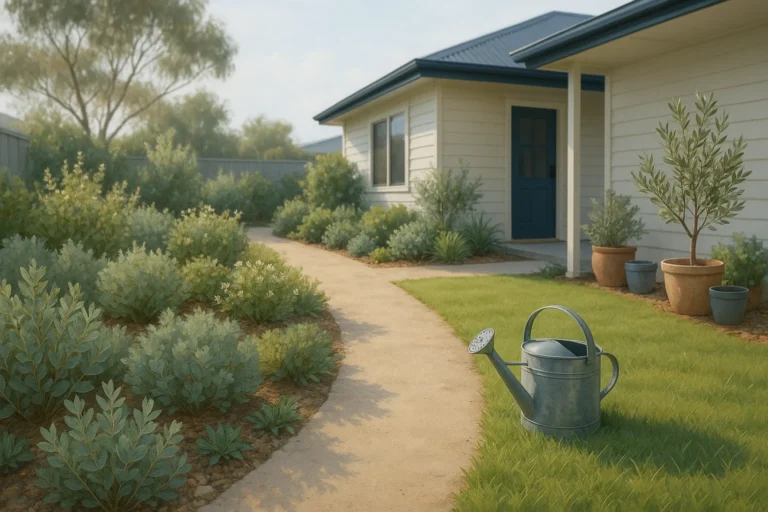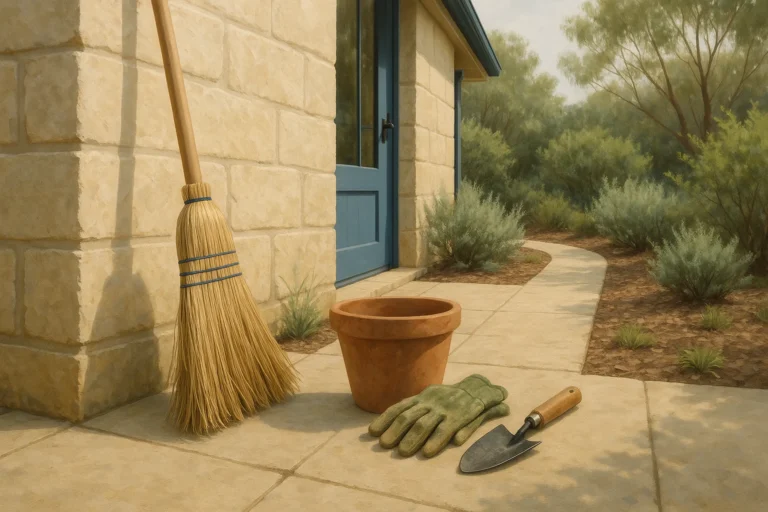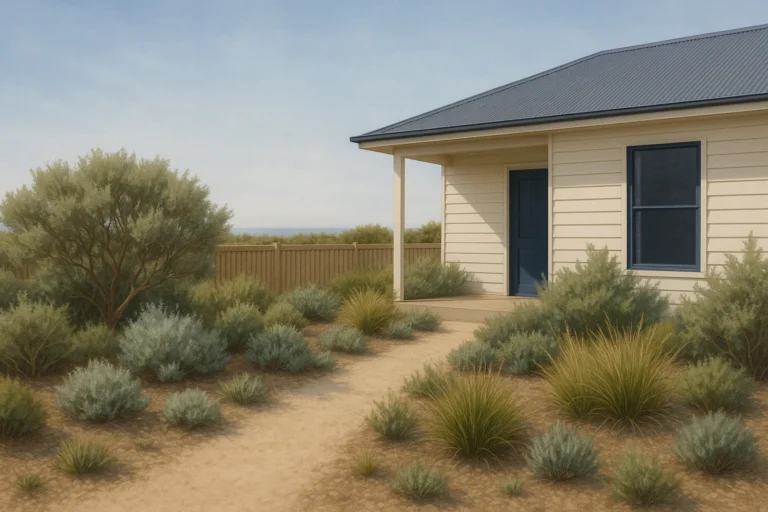
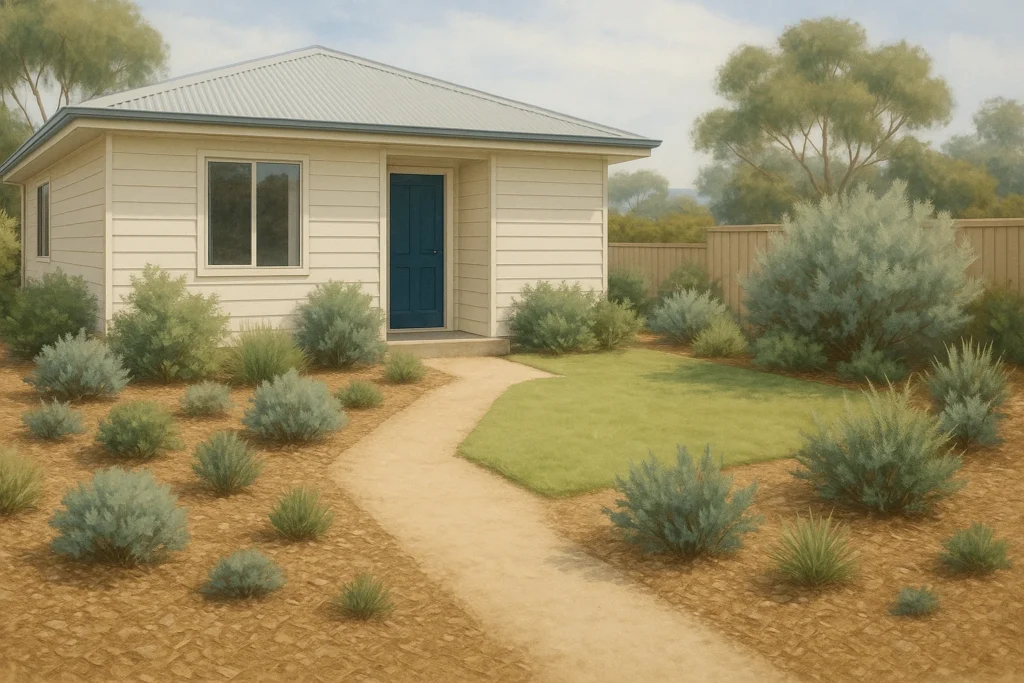
An easy-care garden should still feel welcoming. The best choices are usually the ones that suit how often the property is visited, how guests move through it and what the site naturally supports. Start with a maintenance plan before buying plants or laying new surfaces.
Think about everyday use
Map the route from parking to the front door, rubbish bins and outdoor seating. Keep planting out of these routes and avoid placing delicate pots where luggage will knock them over. Consider what will happen when several windy or hot days fall between visits.
Plan an easy-care garden routine
- Keep beds clearly edged and accessible for weeding. Narrow, awkward strips can create more work than a larger, well-planned bed.
- Choose plants that fit at maturity. Ask locally about suitable species for your soil, exposure and available watering.
- Reduce the number of small pots unless someone can check them reliably. Larger stable containers may be easier to manage, depending on planting and location.
- Group watering needs and make irrigation controls clearly labelled. Leave simple instructions for the person checking the property.
- Plan regular inspections rather than assuming automatic irrigation makes the garden self-sufficient.
Leave a useful garden handover
Write a one-page garden handover with photographs: which taps serve which areas, where tools are stored and which plants need special attention. Do not include security codes in a publicly accessible document.
Budget for upkeep
Allow for pruning, mulch renewal, replacement plants and seasonal checks. A low-maintenance garden is one with predictable jobs, not one that never needs attention. Keep guest-facing areas clear, stable and easy to inspect between stays.
Try changes in one small area first. Watch how the planting copes between visits before repeating the design elsewhere. For help choosing locally suitable plants, explore Green Adelaide’s local native plant guidance and discuss your site with a local nursery.