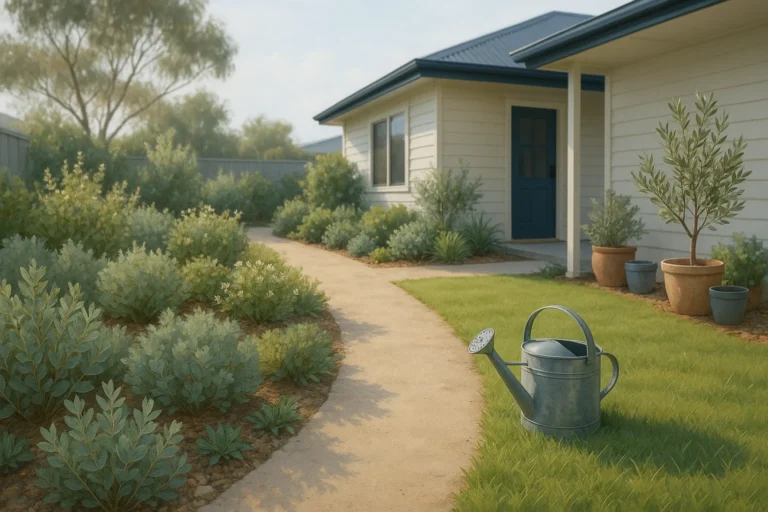
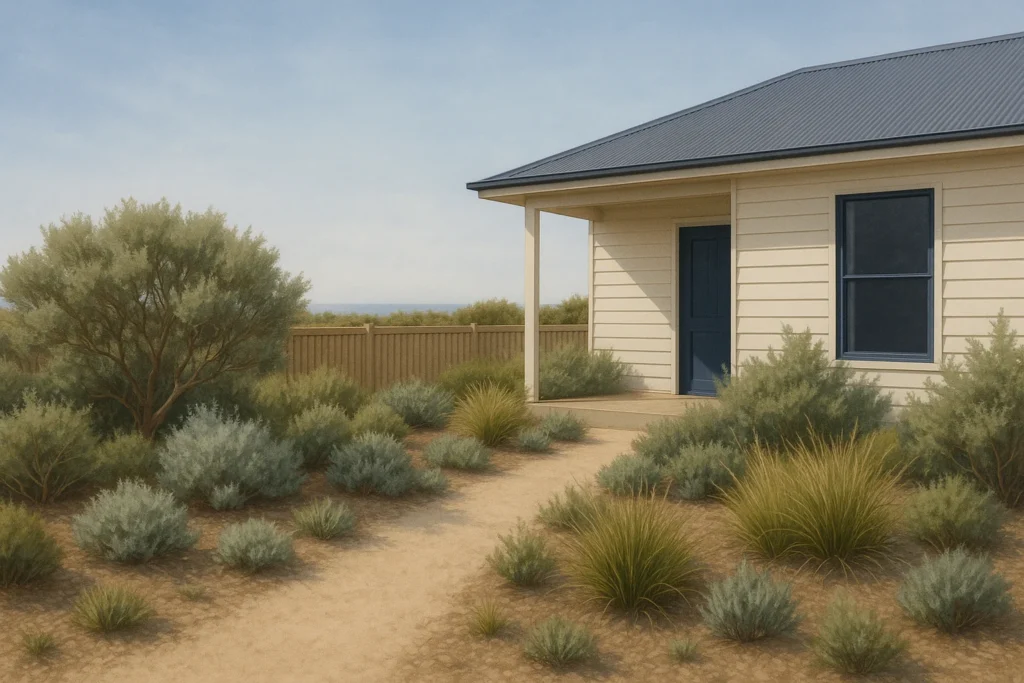
A windy coastal garden needs plants suited to its own conditions. Two gardens in the same street can have very different exposure. A sheltered courtyard and an exposed front verge may need different plants, even though both are close to the coast. Start by understanding the spot rather than buying a plant because it looks good in a nursery display.
Map your windy coastal garden
Note morning and afternoon sun, prevailing wind, reflected heat from paving and whether salt spray reaches the area. Check drainage after rain. A coastal location does not automatically mean the soil is sandy or freely draining.
Take a useful brief to the nursery
- Photograph the bed and measure its length and width. Include nearby walls, paths, windows and overhead services.
- Decide the mature size you can accommodate. A shrub that constantly needs cutting away from a path is rarely a low-maintenance choice.
- Ask about locally suitable plants for the actual exposure, soil and watering available. Local native species may be useful options, but suitability still depends on the site.
- Check root behaviour, potential toxicity around children or pets, and whether the species is weedy in your area.
- Buy a small trial group before committing to a whole garden. Observe it through changing weather.
Keep plant records from the start
Keep the plant labels and write the planting date on them. Photograph the final layout so you can identify plants later, even if labels fade or blow away.
Allow room to grow
Use mature spread to set spacing. Filling every gap immediately can produce overcrowding within a few seasons. New plants also need establishment care. Drought tolerance in an established plant does not mean a new one can be ignored. Keep the first planting manageable so you can check soil moisture and watch how each plant responds.
For more planting ideas, see State Flora’s South Australian coastal garden plants.