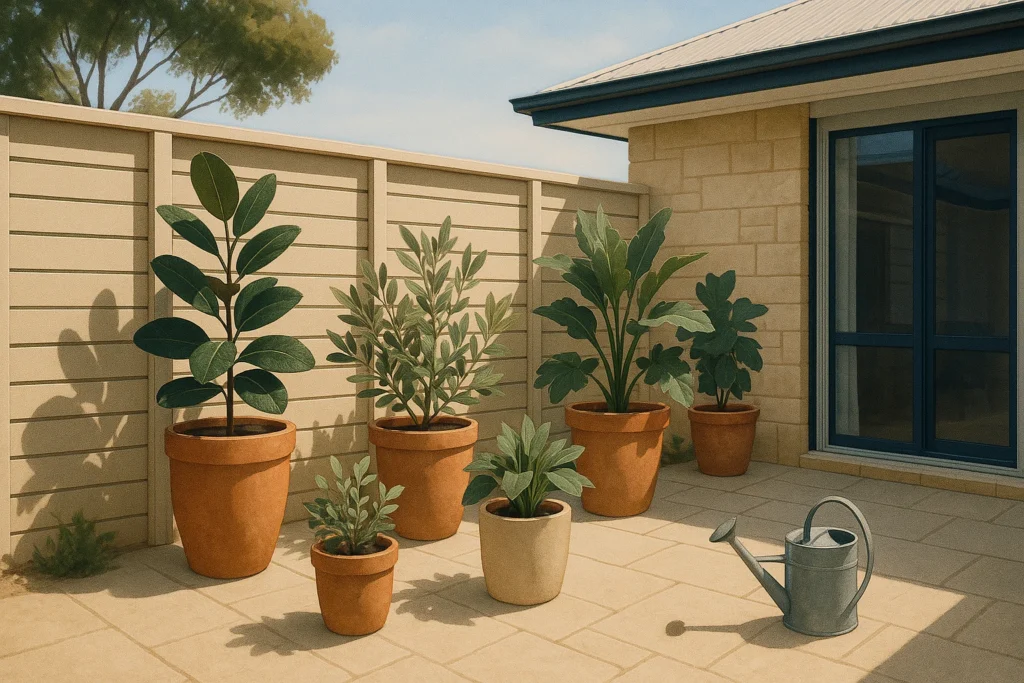
Pot plants dry differently from garden beds. A small terracotta pot in full wind can need attention well before a large pot in a sheltered courtyard. Use the condition of the potting mix and plant, rather than one fixed schedule for every container.
Check the basics
Make sure drainage holes are open and the container is stable. Lift only pots you can safely manage. Check that runoff will not make steps slippery, stain neighbouring property or pool around the building.
A practical routine for pot plants
- Check moisture beneath the surface. A dry top layer can hide damp mix below, while water may sometimes run down the sides without wetting the root ball.
- Water slowly and check that the mix is being moistened evenly. Follow plant-specific guidance rather than leaving every pot standing in a full saucer.
- Group plants with similar light and water needs. Move vulnerable containers to suitable shelter before a hot, windy spell, without suddenly depriving sun-loving plants of light.
- Check ties, stakes and heavy top growth. Use soft ties and leave room for stems to expand.
- Feed only when appropriate for the species and season, following the product label. Extra fertiliser will not fix a thirsty or waterlogged plant.
Make care easier between visits
Choose a small number of pot sizes and plant types if the property is only visited occasionally. It makes a watering handover much easier than a collection of containers with very different needs.
Know when to repot
Roots crowding drainage holes, repeated drying and poor growth may justify investigation. Use suitable potting mix and follow its handling instructions, including dust precautions. Seek plant-specific advice before moving to a much larger pot.
Before leaving the property, check that each container has a clear place in the care routine. Tell the next person which pots need closer attention and where suitable watering equipment is kept. For broader water-saving ideas, see SA Water’s water-wise guidance.