Hand-weeding in short, regular sessions is often easier than tackling a bed after weeds have flowered and spread. The aim is to remove the right plant with as much of its regrowth-producing material as possible, while disturbing the surrounding bed as little as you can.
Identify before pulling
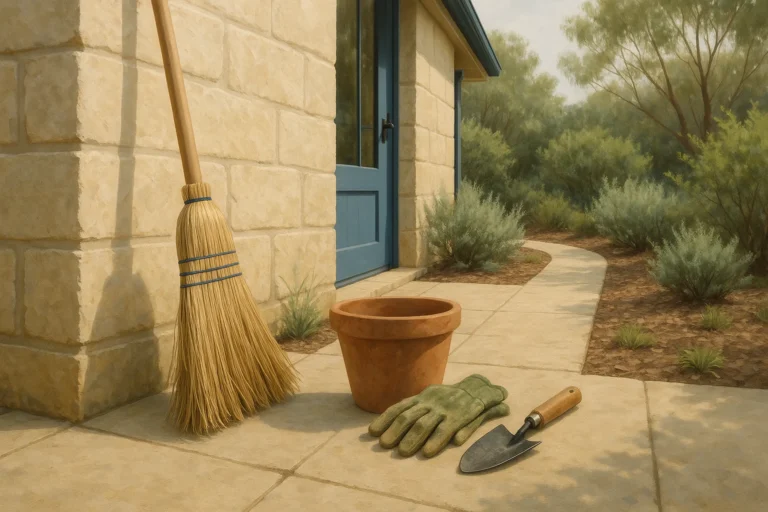
If a plant is unfamiliar, photograph its leaves, stem and flowers and ask a nursery or local weed service for identification. Do not handle plants with unknown sap or spines bare-handed. Wear gloves and closed shoes and check beneath dense growth before reaching in.
Hand-weeding in small sections
- Choose a time when soil is slightly moist and workable. Very dry ground can make roots snap; saturated ground can be damaged by foot traffic.
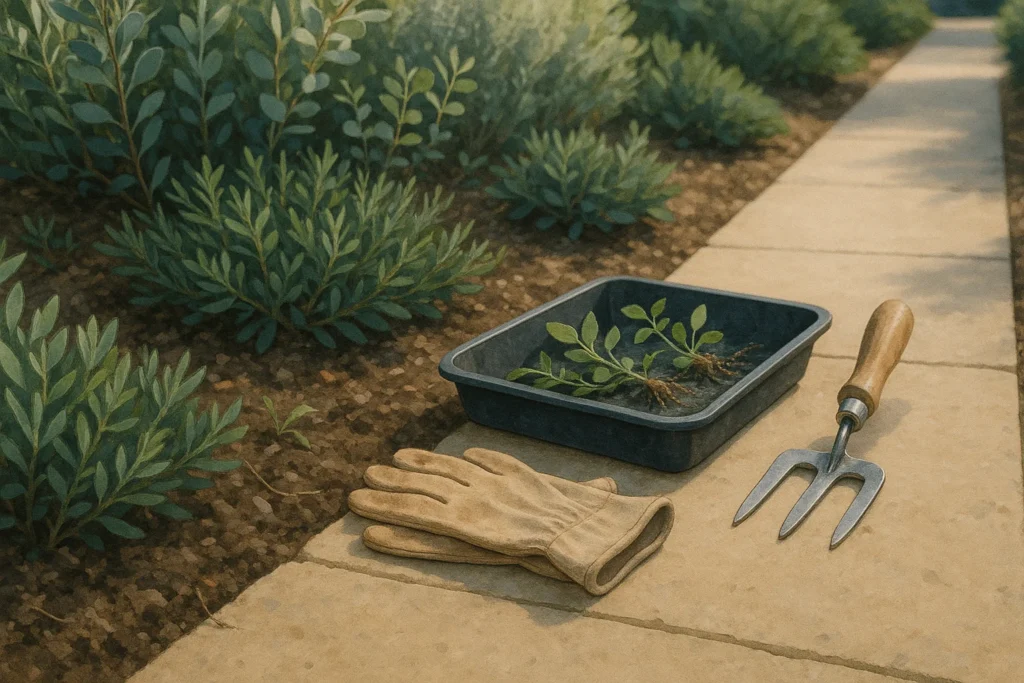
- Loosen soil beside the weed with a hand tool, avoiding the roots of plants you want to keep.
- Lift gently from low on the stem. Different weeds regrow differently, so learn whether roots, runners or bulbs need careful removal.
- Contain flowers and seed heads before they scatter. Keep invasive weeds separate from material you intend to compost.
- Smooth the disturbed soil and restore suitable mulch without covering plant stems.
Return for a short follow-up
Set a timer for 15 minutes and return to the same area a week later. Young regrowth is easier to spot in a recently cleared bed than in a neglected one. Keep the session small enough to finish collecting weeds and putting tools away. Photograph unfamiliar regrowth before removing it, especially if it appears beside plants you want to keep.
Dispose of weeds properly
Check local green-waste rules and species-specific advice. Home compost heaps may not kill seeds or persistent plant parts. Do not dump weeds on vacant land or dunes, and do not assume vinegar or salt is harmless to nearby soil and plants.
Need help identifying a weed? See Green Adelaide’s weed identification resources.