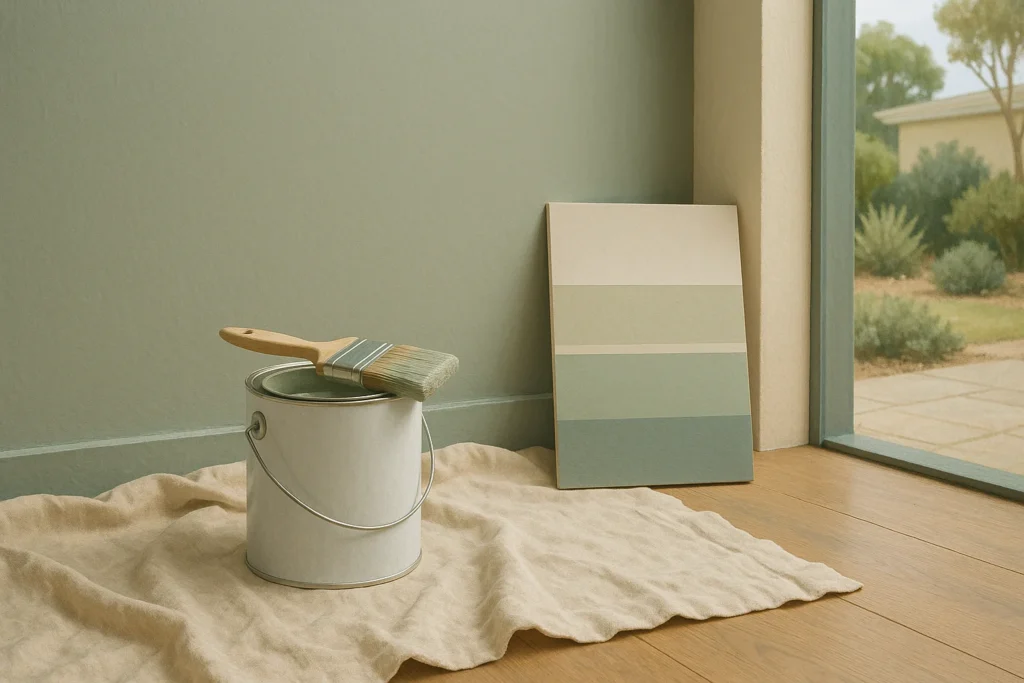
Touching up painted walls can improve small scuffs, but the result is not always invisible. Colour, sheen, age, texture and lighting all affect the result. Start with gentle cleaning and a small test rather than painting a large patch straight away.
Identify the existing finish
Check any retained paint tin or decorating record for the product, colour, sheen and date. A colour name alone is not enough to guarantee a match. Inspect for dampness, flaking or unusual damage before treating the mark as cosmetic.
Test before touching up painted walls
- Test a mild cleaning method on an inconspicuous area, following the paint manufacturer's advice. Avoid abrasive pads that can change the sheen.
- Let the wall dry completely. Some marks look different while damp.
- If repainting is appropriate, use sound, correctly stored matching paint and stir it thoroughly according to its instructions.
- Test a small area using an applicator that matches the original texture. Allow the full drying time before judging the colour.
- View the result in daylight and artificial light. If it flashes noticeably, repainting to a corner or natural break may produce a better finish.
Keep a clear paint record
Label leftover paint with the room, wall, product and application date. Store it as directed, out of reach of children, and photograph the label for your maintenance records.
Do not sand unknown old coatings
Older paints and building materials can present lead or asbestos risks. Get suitable advice before scraping, sanding or drilling suspect surfaces. Damp patches and recurring cracks need their cause addressed before cosmetic work.
Once the test has dried, photograph it from a normal viewing distance. Record the paint and applicator used, so future repairs start with the same information. If the finish still stands out, allow time to plan a larger section rather than repeatedly adding paint to the spot.